Adding A DPF Warning LED To My Peugeot 308
You know what's absolutely ridiculous? Modern diesel cars can decide, completely on their own, that they're going to clean the DPF... and they don't bother telling you. Seriously. The ECU knows. The injectors know. The turbo knows. Half the bloody car knows. But the one person actually driving it? Nah... good luck, buddy.
So what happens? You park the car halfway through a regeneration, switch it off, and slowly help clog the DPF. Then a few months later you're wondering why the dashboard lights up like a Christmas tree and somebody at the dealership is quoting you enough money to fund a small vacation.
That annoyed me enough to actually do something about it.
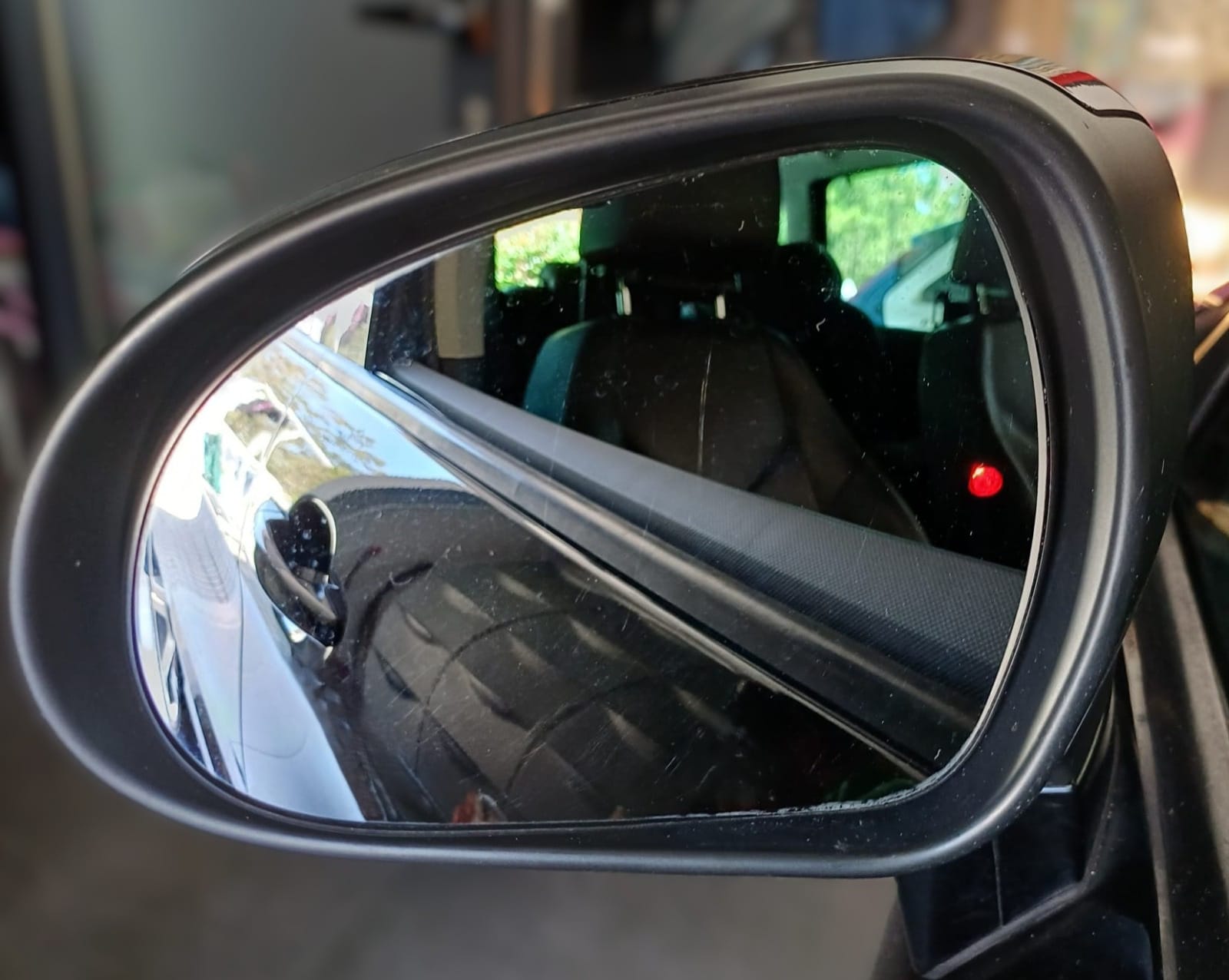
Instead of buying one of those expensive OBD gadgets or staring at diagnostic apps every five minutes, I installed a small red LED inside the driver's side mirror. Whenever the DPF regeneration starts, the LED lights up. That's it. Simple. Elegant. No annoying buzzers. No extra screens. Just a tiny reminder saying, "Maybe don't shut the engine off for another five minutes."
Why put the LED in the mirror?
You could stick an LED almost anywhere...
The dashboard. The A-pillar. The steering column.
The mirror turned out to be the perfect location. It's already in my field of vision while driving, and because the LED shines through the mirror, it's impossible to miss without becoming distracting.
Plus... let's be honest... it looks pretty cool.
Understanding the DPF Regeneration Signal
The Peugeot 308 1.6 e-HDi doesn't exactly advertise when regeneration is happening.
Luckily, PSA engineers left clues behind if you know where to look.
During regeneration, several components receive power that normally stay off like the Rear heated window circuit and the Heated mirrors. It does this to artificially increase the electrical load on the engine, which forces it to work harder, generate more heat, and safely burn off trapped soot.
In my case I used the signal from the Heated mirrors, allowing the LED to indicate exactly when the ECU is burning soot out of the DPF (note that the LED will also turn ON when you manually press the Heated mirrors button).
No OBD dongles. No Bluetooth. No smartphone balancing on the leg or passenger seat.
Just one wire doing its job.
Taking the Mirror Apart
Here's the part where people usually panic.
"It's a mirror!" "I'm going to break the glass!"
Relax.
The mirror glass is clipped into the adjustment mechanism. With a little patience (and preferably some plastic trim tools), it pops off surprisingly easily.
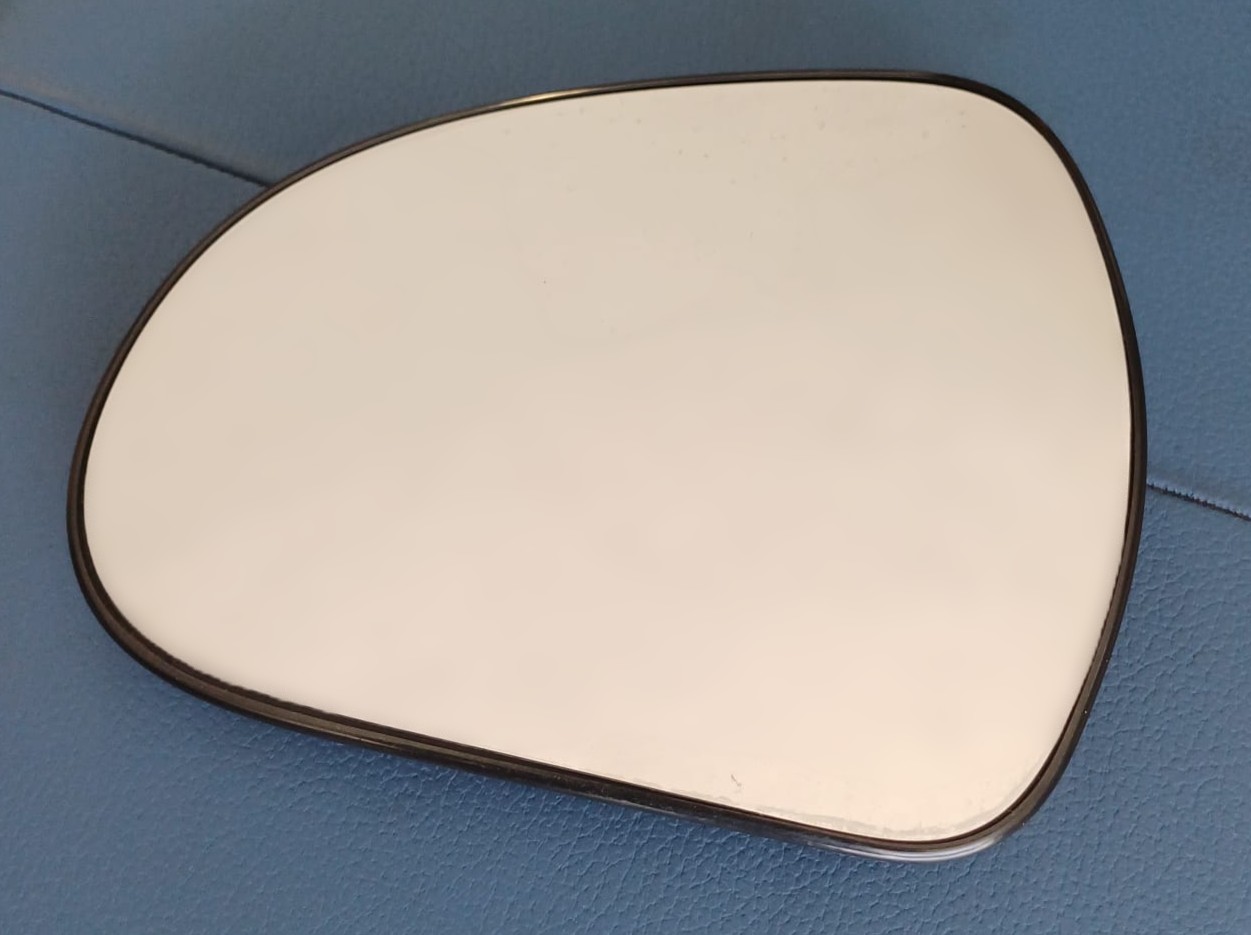
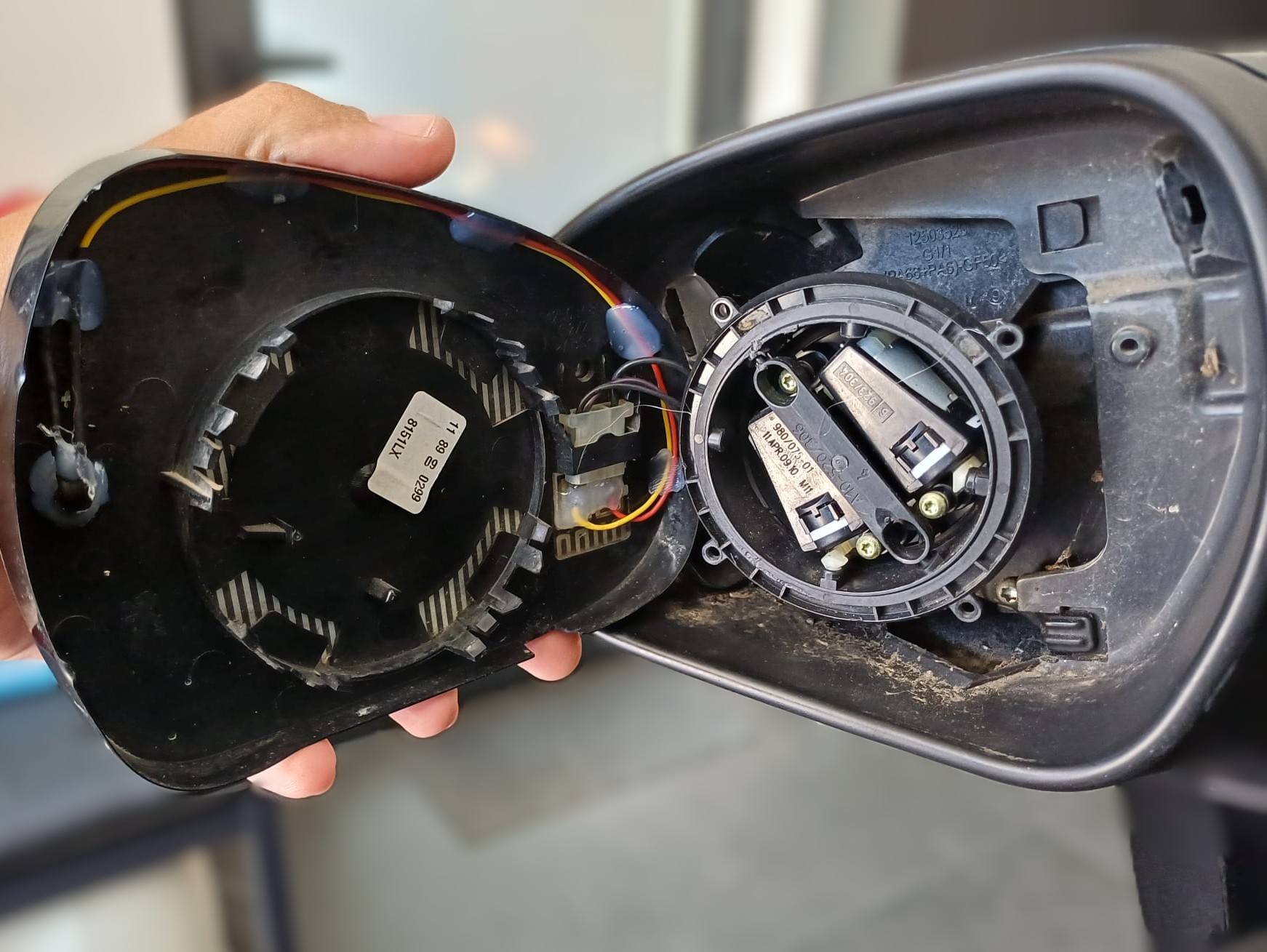
Once removed, you'll have access to the inside of the mirror housing.
Seeing the inside for the first time is actually reassuring. It looks complicated... until you realize it's mostly empty plastic.
Perfect place to hide a little LED.
Installing the LED
The goal wasn't to make it obvious.
I didn't want a giant flashing beacon every time regeneration started.
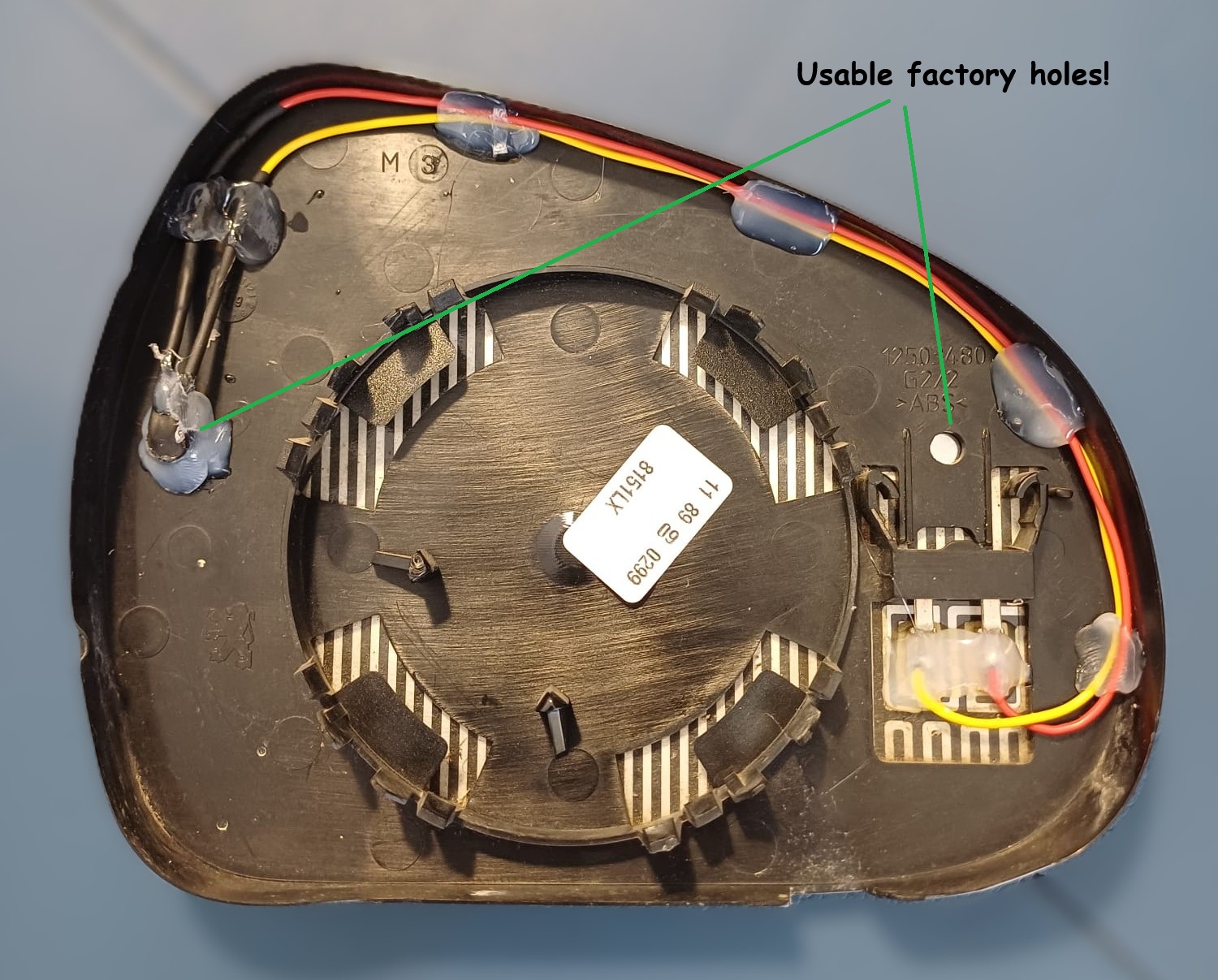
Instead, I used a tiny factory made hole (there's 2) inside the housing and mounted a small red LED so that it shines gently through the mirror area.
When it's off...
You don't know it's there.
When it comes on...
You instantly notice it.
Exactly what I wanted.
The wiring was routed inside the mirror housing and through the existing cable path, so nothing gets pinched when adjusting the mirror. Like I said, there's 2 holes, I used the one closest to me but it's personal preference.
Wiring Everything Up
This is probably the easiest electrical modification I've ever done.
You'll need:
- A small high intensity 5mm red LED
- A 1KOhm resistor
- Thin automotive wire
- Heat shrink tubing
- Soldering iron
- hot-glue
- Basic hand tools
The wiring itself is straightforward.
Simply connect the LED and resistor to the plug pins of the Heated mirror.
Take your time routing the wires.
Nothing ruins a nice DIY project faster than hearing a wire rattling inside the mirror every time you hit a pothole.
Also clean the dead mosquitos inside the mirror...
The Finished Result
Once everything was back together, the modification became almost invisible.
The mirror still looks completely factory.
No extra switches.
No ugly LEDs glued to the dashboard.
No holes drilled into interior trim.
Then regeneration started...
A small red glow appeared inside the mirror.
Perfect.
It catches your attention immediately without screaming at you.
Was It Worth It?
Absolutely.
It's one of those tiny modifications that completely changes the ownership experience.
Instead of guessing whether the DPF is cleaning itself...
Instead of wondering if it's safe to switch the engine off...
Now I simply glance at the mirror.
LED on?
Keep driving.
LED off?
Shut it down.
Done.
Conclusion
Sometimes the best DIY projects aren't the flashy ones. They're the little quality-of-life improvements that make you wonder why the manufacturer didn't think of them in the first place.
A tiny LED, a couple of wires, and a couple of hours in the garage completely removed the mystery surrounding DPF regeneration on my Peugeot 308.
And honestly... if a random guy with a soldering iron can solve a problem that a multi-billion-euro car manufacturer couldn't be bothered to explain to the driver...
...well... that's just funny.
Comments
Tom said:
Great idea, will do it to my Berlingo!
Greeting from Lituania
Aug 10, 2026 18:17
Leave a comment