From Gear to Direct-Drive: Comparing Force Feedback Technologies for Simracing Wheels
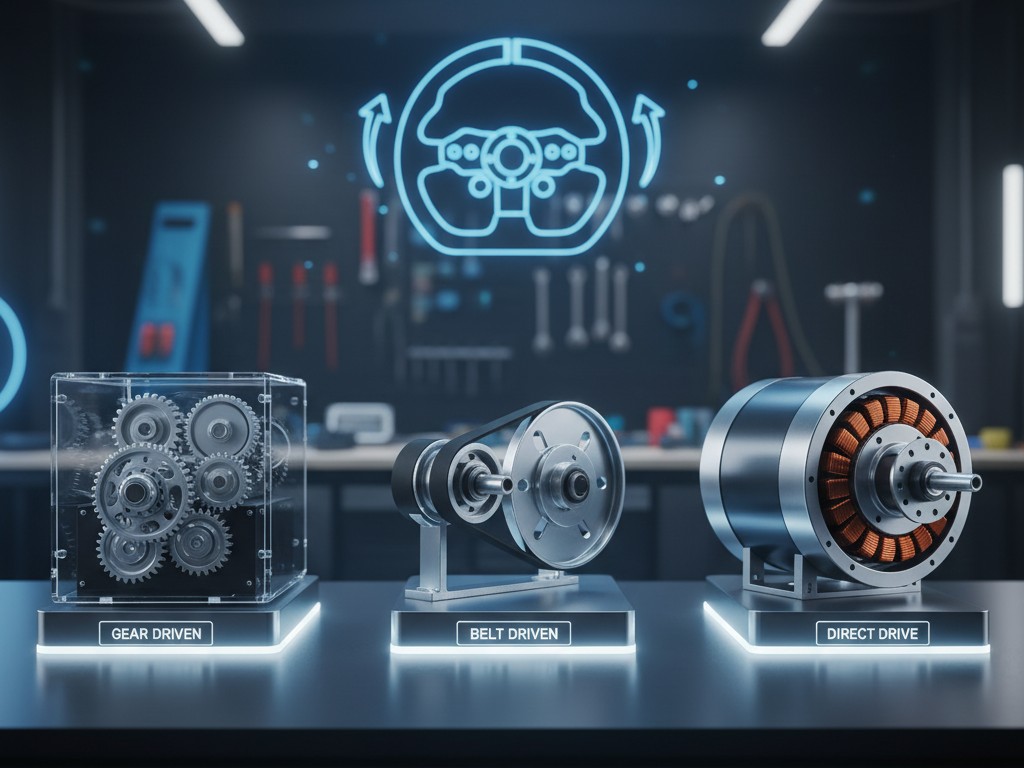
Force feedback (FFB) is the single biggest factor that turns a steering wheel into a believable racing input device. Different mechanical approaches, gear, belt, and direct-drive, each translate virtual physics into tactile information in their own way. This guide breaks down how they work, how they feel, and which trade-offs matter depending on your goals and budget.
Quick overview
Three mainstream FFB families dominate the market:
- Gear-driven: cheap, robust, uses a gear train between motor and rim.
- Belt-driven: mid-range, employs timing belts to smooth and quiet the transmission.
- Direct-drive: premium, mounts the wheel directly to a high-torque motor shaft for maximum fidelity.
Each approach affects torque delivery, detail resolution, noise, maintenance, and cost, all important when choosing a wheelbase.
How they feel — a practical comparison
Gear-driven wheels tend to feel punchy and immediate but can be mechanically “notchy.” The gear teeth can introduce cogging (a stepping sensation) and audible whine. They’re great for budget setups and for drivers who prefer strong, predictable kicks.
Belt-driven wheels feel smoother and more analogue. The belts absorb micro-jerks, which reduces cogging and surface noise. That makes belt wheels excellent for longer sessions and more nuanced feedback without the direct-drive price tag.
Direct-drive wheels feel most faithful to the simulation. Because torque is applied without intermediary mechanics, you get the finest micro-details (road texture, small curb feedback) and the cleanest response. The trade-offs are cost, weight, and higher power/rigid-mount requirements.
Technical comparison (short)
Torque (peak & continuous)
- Gear: moderate (gear reduction helps but masks some detail).
- Belt: good continuous torque, slightly damped dynamics.
- Direct-drive: highest continuous and peak torque (best for heavy forces).
Detail & fidelity
- Gear: limited micro-detail because of backlash and tooth interaction.
- Belt: strong mid/high detail with mild damping.
- Direct-drive: best micro-detail and dynamic range.
Latency & responsiveness
- Gear: quick but can show small timing artifacts from backlash.
- Belt: very responsive, slight compliance under extreme load.
- Direct-drive: fastest and most linear mapping from motor to rim.
Noise & mechanical artifacts
- Gear: audible gear whine and cogging.
- Belt: quiet, low cogging.
- Direct-drive: quiet (motor hum possible), minimal transmission artifacts.
Maintenance
- Gear: occasional lubrication, may develop backlash over years.
- Belt: belts require tension checks and eventual replacement.
- Direct-drive: minimal mechanical wear, but motors/encoders must be cared for.
Practical pros & cons
Gear-driven — Pros
- Affordable entry cost
- Durable mechanical design
- Simple electronics requirements
Gear-driven — Cons
- Noticeable cogging and noise
- Less nuance in feedback
Belt-driven — Pros
- Smooth, quieter operation
- Better fidelity for similar budgets
Belt-driven — Cons
- Belt wear and tensioning maintenance
- Slight compliance at extremes
Direct-drive — Pros
- Unmatched realism and resolution
- Exceptional torque and dynamic response
Direct-drive — Cons
- High cost and power needs
*Requires rock-solid rig mounting and cooling
Tuning and real-world tips
- Start with conservative gain. Too-high overall gain clips and hides subtleties.
- Prefer higher encoder resolution. It reduces stepping and improves fine feel.
- Limit aggressive filters. Over-filtering smooths the road but removes realism.
- Keep mechanics tight. Any play in the mount, wheel, or quick-release ruins the illusion.
- Monitor temps on direct-drive motors. Add cooling or lower sustained torque if needed.
Which one should you choose?
- Budget / casual: Gear-driven gives adequate immersion without a big investment.
- Enthusiast / mixed use: Belt-driven hits the sweet spot for feel vs price.
- Serious / competitive / sim purist: Direct-drive is the ultimate choice if you can afford the power and mounting requirements.
Conclusion
There’s no one-size-fits-all answer, only informed trade-offs. Gear keeps costs low, belt smooths and refines, and direct-drive delivers uncompromising realism. Decide based on your budget, space/rig rigidity, and how much tactile fidelity you need.